
ORCA Offshore
And the man behind
Home »
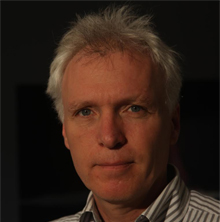
Herm Bussemaker
Capability Statement
Herm Bussemaker — Senior Naval Architect, Orca Offshore
I solve the marine engineering problems that decide whether an offshore
operation can be executed safely, on schedule and within budget: how a
17,000 tonne jacket survives its tow and launch, whether a float-over can
be completed in the available weather window, what a crane vessel’s mooring
does at the limit, and why a lift went wrong. Over thirty years across the
North Sea, Gulf of Mexico, West Africa, the Caspian and the Far East, working
for operators, contractors, fabricators and regulators.
MSc Naval Architecture, Delft University of Technology. Dutch and English.
Based in Purmerend, the Netherlands, working worldwide, offshore included.
What I do
Transport and installation analysis
Full marine engineering scope for getting large structures from quay to
seabed: transport motion and stability analysis, jacket launch and upending,
topside float-over including time domain simulation, docking and mating,
and the installation procedures that follow from the analysis. Delivered for
the 17,000 ton launch jacket and 25,000 ton topside float-over in
the Caspian Sea for BP as subcontractor to Subsea 7; for the Statoil (now
Equinor) Gina Krog jacket built by Heerema Fabrication; for the CNGS and
LAM-E platform float-overs; and for the SPT Offshore Ophir wellhead platform
east of Malaysia.
Mooring analysis
Station-keeping for vessels that have to hold position while something
difficult happens alongside. Full mooring analysis for the SSCV Hermod;
accommodation barges African Lifter and Otto 1 offshore Angola; berth
mooring design for the Dana Petroleum Western Isles FPSO at the Keppel
Verolme quay in Rotterdam; and crane vessel mooring for wind turbine
foundation installation in the North Sea.
Heavy lift and dynamic lift analysis
Dynamic lift analysis where vessel motions, rigging response and clearance
govern the operation, including the East Cendor platform lift with the Asian
Hercules III, and a pile gripper design for Euro Rigging. Where the flow
physics matter rather than the potential-flow assumptions, CFD is brought in
— as for a shallow water heavy lift where small keel clearance was
changing the crane vessel’s motion behaviour.
Operational decision support and motion forecasting
Operational Motion Forecast (OMF) is a live, web-based
forecasting service for offshore transport and installation. Before the
operation starts, a full 3D multibody dynamic model of the actual vessel and
cargo configuration is built in MOSES. Each new weather forecast is then run
through that model as a load case, and the resulting motions, loads and
utilisation factors against the defined operational limits are published to
the offshore crew through a web interface — including polar plots that
show how utilisation varies with vessel heading, so the installation manager
can see which headings remain inside limits and re-plan around the forecast
rather than simply waiting it out. A full PDF report can be downloaded at any
point to document a change of plan for the management of change system.
The forecast is prepared and monitored by a senior naval architect before it
reaches the vessel, so the crew receives a checked engineering judgement
rather than raw model output. No additional hardware is required on board.
The service is delivered with a full dynamic analysis report and an OMF
system description manual for marine warranty surveyor review and approval.
Full description of the OMF service.
This builds on earlier operational decision support work, including the
decision support system designed, built and commissioned for the inclined
fall pipe system aboard Tideway’s Rollingstone, and a motion response unit
built for Dutch Offshore Contractors that monitored motions and accelerations
on a tow from Europe to Peru.
Structural strength and fatigue
Spectral structural transport strength and fatigue analysis with code
checking, for the Marathon EG Alba B3 platform with IV Oil & Gas and
Heerema Fabrication Group, and for three pipelay vessel stingers on Ulstein
Sea of Solutions vessel designs.
Independent review, audit and root cause analysis
Second-opinion work where an operator, insurer or authority needs a judgement
that is not the contractor’s. Technical audit for Chevron on the feasibility
of the Allseas Pioneering Spirit. Root cause analysis of the August 2015
Alphen aan den Rijn crane collapse, commissioned by the Dutch Safety Board.
Independent expert reviewer of EU Horizon 2020 Green Deal calls on offshore
renewable energy.
Suction pile and anchor foundations
Design, procurement, fabrication and installation of suction piles, cluster
piles and suction anchors — including cluster piles at 800 m water
depth for the Ceiba development offshore Equatorial Guinea, the double
cluster piles used in the Kursk recovery sawing operation, suction pile
mooring anchors for the Moho Bilondo and Prosafe ABO FPSOs, and the X12
suction anchor for the SEVAN Huntington FPSO. Inventor of a patented suction
embedded anchor for sand, with responsibility for its large-scale test
programme.
Self-installing platforms and offshore wind foundations
Inventor and developer of the SIP II and SIP III self-installing
platform concepts and the self-installing Monopod, realised on the Burlington
Millom West, Calder and Talisman Bunga Raya projects. As Technical Director of
MonoBase Wind, inventor and patent holder of the MonoBase gravity base and
floating wind foundations, running the design team and the scale model test
programme.
Concept design, FEED and model testing
Deputy Project Manager for the basic design of Heerema’s one-billion-dollar
crane vessel, with commercial, contractual and technical responsibility for
all model tests. Team leader for new vessel concept design at HMC. Wind
service vessel concept with Naval Dynamics and Huisman. Project manager for
semi-submersible crane vessel verification model tests at MARIN and SIP I
model tests at TU Delft.
Software and methods
- Bentley MOSES — primary tool since 1990. Frequency and
time domain simulation of single and multi-body floating systems: transport,
launch, upend, float-over, lift, mooring, towing and stability. - Spectral structural analysis with fatigue assessment and code checking.
- CFD, supervised, where viscous or shallow-water effects govern vessel response.
- Physical scale model testing — programme specification and management at MARIN and TU Delft.
- Custom engineering software — motion monitoring hardware and live operational forecasting systems built in-house.
Sectors and regions
Offshore oil and gas (operators and installation contractors), offshore wind
fixed and floating, marine heavy lift and transport, salvage, dredging and
fall pipe operations, and superyacht new-build — including the launching
analysis for a €150 million yacht built in the Netherlands.
Projects delivered in the North Sea, Gulf of Mexico, West Africa, the Caspian
Sea, the Irish Sea, the Baltic and Southeast Asia.
Clients and counterparties
Work has been delivered for or alongside BP, Chevron, Shell/NAM, Statoil,
TenneT, Van Oord, Boskalis, Heerema Marine Contractors, Heerema Fabrication
Group, Subsea 7, SPT Offshore, Keppel Verolme, Petronas Carigali, Murphy
Oil, Wintershall, Talisman, Ulstein, Huisman, Tideway, Dutch Offshore
Contractors, the Dutch Safety Board and the European Commission.
What I don’t do
- Subsea pipeline and riser stress analysis
- Process, topside systems or electrical engineering
- Class certification, and marine warranty surveyor sign-off
- Geotechnical site investigation and soil surveys
- Detailed structural fabrication drawings
Where a project needs a skill not held in-house, a partner or subcontractor
is engaged to provide it.
Common questions
What kind of offshore engineering problems does Orca Offshore solve?
Marine engineering analysis for offshore transport and installation: jacket
launch and upending, topside float-over, heavy and dynamic lift, tow and
transport motion analysis, mooring analysis for crane vessels, barges and
FPSOs, and structural transport strength and fatigue assessment. Also live
operational motion forecasting during offshore execution, independent
technical review, technical audit and marine incident root cause analysis.
Which simulation software is used?
Bentley MOSES is the primary hydrodynamic and marine simulation tool, used
continuously since 1990 for frequency domain and time domain analysis of
single and multi-body floating systems. It is supported by spectral
structural analysis with code checking, CFD where flow effects govern, and
physical scale model testing at institutes including MARIN, TU Delft and Oceanide.
Does Orca Offshore work on offshore wind as well as oil and gas?
Yes. Offshore wind work includes monopile self-floating transport and towing
studies for the Walney II extension with Van Oord, crane vessel mooring
for turbine foundation installation, self-installing substructure concept
studies for wind turbines, and the invention and development of the MonoBase
Wind gravity base and floating foundations. Independent maritime expert
reviewing EU Horizon 2020 Green Deal calls on offshore renewable energy.
How does Orca Offshore structure and price its work?
Three engagement models are available: fixed-scope studies quoted before work
begins, day rate for offshore attendance and open-ended troubleshooting, and
retained advisory for contractors who want a second opinion on call during
tendering and execution. Projects range from a few hours to several years,
with a typical duration of around six weeks. Where a project requires a skill
not held in-house, a partner or subcontractor is engaged to provide it.
What do clients receive, and how quickly can work start?
The standard deliverable is an analysis report suitable for submission to a
marine warranty surveyor, together with installation and operational
procedures where the scope requires them. MOSES models are retained by
default; hand-over can be discussed and is quoted separately. Lead time is
normally one to three weeks from agreed scope to start, and shorter at short
notice for urgent operational problems. Professional indemnity insurance can
be arranged if required.
Does Herm Bussemaker work on client sites and offshore?
Analysis work is carried out from the Netherlands, and Orca Offshore does not
take on resident on-site office placements. Offshore attendance is possible,
with current BOSIET certification and offshore medical, as is model test
supervision and client representation worldwide.
Contact
Orca Offshore b.v., Purmerend, the Netherlands
info@orca-offshore.com
KvK 51231174 · VAT NL8231.66.533.B01